
Tennis News

From around the world

Insider Notebook: Equality For All

Insider Notebook: Equality For All

  • Posted: Jan 01, 1970

Eugenie Bouchard and Bethanie Mattek-Sands out in three sets: Lucie Hradecka’s hard-hitting game came online just in time in the final set as she ousted No.45 Bouchard 6-4, 3-6, 6-2 in the 1st round of the Miami Open. Polish qualifier Magda Linette rallied to beat Bethanie Mattek-Sands 6-4, 6-7(7), 6-3.

Must-see second rounds set: With the first round of the Miami Open complete, here are the matches to watch in the second round: Garbiñe Muguruza vs. Dominika Cibulkova, Angelique Kerber vs. Barbora Strycova, Andrea Petkovic vs. Caroline Garcia, Sloane Stephens vs. Heather Watson, Daria Kasatkina vs. Simona Halep, Elina Svitolina vs. Zhang Shuai, Alize Cornet vs. Agnieszka Radwanska, Sara Errani vs. Naomi Osaka, Timea Bacsinszky vs. Margarita Gasparyan, Julia Goerges vs. Sam Stosur, Venus Williams vs. Elena Vesnina, Kristina Mladenovic vs. Nicole Gibbs.

Billie Jean King and Chris Evert hold court: The two legends called a press conference on Wednesday afternoon in response to the discussion of equal prize money kicked off by former BNP Paribas Open CEO Raymond Moore on Sunday. Moore has since resigned. King and Evert told reporters they had since been inundated with media requests and decided a press conference would be more efficient.

Here are some of the highlights:

– Chris Evert recalls the 70s: While King spoke about the future, Evert spoke of the importance of understanding the past in order to understand just how far women’s tennis has come.

Many of you were too young to even know what happened in the early ’70s. Some of you weren’t born. But there were a lot of struggles and there were a lot of sacrifices being made in the early 70s, and I think I’m going to talk a little bit about those.

In the early ’70s, the men had it really easy. Men athletes were very respected, admired, looked up to, and there was something almost unsettling about a strong, muscular athletic woman running around the court sweating. That was the early ’70s and that was the stigma.

Then Billie Jean King came into the picture with the Original 9. First of all, Billie Jean scared me to death with her forward thinking. She was bold and she was aggressive and she was damn smart. That was very intimidating to me, a teenager at that point.

In my mind, she was right up there with Gloria Steinem. At that point, every time I turned on the TV I saw demonstrations and I saw bra burning and I saw rallies. I sensed at my young age that there was a revolution of some kind going on. I sensed also that it was very, very important for women.

But I still couldn’t relate to her. I mean, I was a teenager. I was a kid in Ft. Lauderdale growing up in a culture where dads worked and moms stayed home and worked in the home and took care of the kids.

Bobby Riggs, Billie Jean King

In the early ’70s I was lucky enough to see how hard these women tried to sell the sport of tennis. The clinics and the cocktail parties and press conferences and the endless WTA meetings. Even bucking the establishment, who were at the time the USTA, when they threatened to be banned from US Open.

In 1974, when I was a teenager, I played Billie Jean in a tournament in San Francisco in the finals and lost to her quite easily. The next weekend, because we were No. 1 and No. 2 in the world, I played her in Sarasota, Florida and beat her quite easily. I openly wondered why she was so sluggish and just didn’t seem to play her best out there.

I was informed that the day of the finals Billie Jean had flown out from Sarasota and spent the whole day in New York City doing meetings with potential sponsors, and then she flew back to Sarasota at 5:30. Didn’t even warm up and just went on the court and played.

She put the tour before her career so many times. How many men or women do that? Ask yourself that. By the way, she and her husband at that time, Larry King, took me to Dairy Queen after. (Laughter.) Billie Jean loves her ice cream.

This was the era in the early ’70s of no coaches, no entourages, no agents. We practiced together; we traveled together; we hung out together. We were all friends, comrades, and we had each other’s backs. We were family. It was the best time in tennis. Ever.

So if there is a silver lining to all this that’s gone on in the last week, it’s the fact that there has been such outrage from the players and from the media and from the public defending the women’s game.

I think from time to time we all need a reminder of the evolution of women’s tennis and sacrifices every generation has had to make, from Billie Jean to myself and Martina, Steffi to Monica, to the Williams sisters. What we’ve done to get the credibility, the respect, and equality that we have now.

– Progress made, more progress needed:

To hear the men and women weighing in, tennis players just having this dialog, a discussion, is actually progress. To have Andy Murray and Stan Wawrinka say that about their daughters, that’s progress.

So this next generation of men are going to make a huge difference. We need them, but they need us. We need each other. I think if we can just keep that in our minds all the time, then we’re going to win. The WTA and the ATP, ITF, USTA in this country, we all have an opportunity to help make the world a better place. I just hope that’s what we’re going to do.

– Equality over all: King emphasized her position is not about women vs. men but about equality and continuing to use tennis’ platform to effect change.

We represent tennis. Because we have men and women’s, we are one of the few that can lead globally on these issues. That is what my life is about and what I care about. Tennis was secondary to me. The reason I would go and do the sponsor meetings is tennis was secondary.

This, inclusion, when it’s about all of us, is everything. We have a chance to continue to lead. To have equal prize money in the majors sends a message. It’s not about the money, it’s about the message. Any time you discount another human being by gender, race, disability, however, we’re not helping ourselves.

You want everyone to make a lot. At least I do. We want to make the pie bigger, the marketplace bigger for all, for all of you so you have jobs. To argue over the prize money issue, what about when Chris and Martina were playing and their ratings were better than the men? We didn’t go, Oh, we deserve more than the men. No. Let’s just keep it equal and help each other.

So anyway, let’s have some fun. It’s not a “he” thing or a “she” thing; it’s a “we” thing. I’m telling you, this is the only way the world is going to make it.

Nicole Gibbs

– Nicole Gibbs weighs in: The American has been a vocal defender (and explainer) of the concept of equal prize money on Twitter, and she was in the audience listening to King and Evert’s remarks when King called on her to chime in:

NICOLE GIBBS: First of all, I just want to thank you guys for your words today. You guys have been such mentors to me throughout my career just with your tennis, but also using your platform, which I think is so, so important.

I was just talking to Jeff over here. I got into a little spat on Twitter last night. I wouldn’t call it a spat but I was just hearing some negative opinions towards women on court with some statistics and some of my own thoughts about equality and finding a way everybody can support one another, like you said.

I had multiple girls in the locker room come up to me and say, Hey, I saw your tweets last night, your messages, but my coach told me not to get involved, or I didn’t think it was smart for me to get involved.

BILLIE JEAN KING: Really?

NICOLE GIBBS: I’m not going to name names, but it’s really disappointing. It’s like, Okay, so you see me out there putting myself out there and trying to give myself an opportunity to use my platform, and you think, Oh, I have an opportunity to use mine too but I’m not going to do that because maybe the media won’t like it or maybe even men who are following me who have these opinions won’t like it.

I think there is far too much worrying about what other people are going to think when you’re campaigning for equality as a woman. I think it’s really important for us to do as you’re saying, use our platform and really just fight the good fight.

BILLIE JEAN KING: What do you say to the ones that say they don’t want to get involved or get committed to this?

NICOLE GIBBS: You know, I try not to be too heavy- handed because…

BILLIE JEAN KING: That doesn’t work. You’re right.

NICOLE GIBBS: Yeah, like you’re saying, though, you can never really fully put yourself in someone else’s shoes, so I’m not going to say, You need to do this…

What I’ll say is, Hey, I would really appreciate some support on that. Or, Hey, I’m writing a blog in the next couple weeks. Would you be willing to give a quote for that that’s authentic and unfiltered?

I get a lot of positive responses, so I think it’s appealing to people in a way that scares them.

CHRIS EVERT: If I could give you some advice: Never be fearful of telling your truth. I think I’m saying that because in my generation there was always so much fear about telling the truth and about consequences and about image and about how you’ll look and how you’ll sound.

You know what? It’s all wrong. It’s all wrong. So I admire you for speaking out as a current player. Just keep doing it.

NICOLE GIBBS: Thank you. Hopefully I can get past 74 in the world so I can have a little higher platform.

BILLIE JEAN KING: Doesn’t matter. You have a platform because we’re global now. We weren’t global when we started. This is fantastic.

Cake not crumbs: King recalled her early interactions with an all-male press corp, and how they struggled to grapple with a strong, outspoken woman advocating for equality.

You have to remember, when I would go to a press conference, and I don’t know about you, Chris, but there wasn’t one woman sportswriter.

There wouldn’t have been one woman in the crowd my whole life. When I played Bobby Riggs, there wasn’t one women sportswriter there. I grew up with guys. It was fun actually. They were funny. We got laughing a lot.

I used to ask them before we started the press conference, I would like each person here to tell me what it means to be a feminist. It was hilarious. All the guys start thinking about it. Whoa, whoa. Let’s go to each [person]. If I say that word, I want to make sure we’re on the same page.

You cannot believe the differences. It was hilarious. Nobody was really sure what they thought. So I just said equal rights and opportunities for boys and girls. Exactly what I’ve said since I was 12. Just means equality. Everybody gets their knickers in a twist. Oh, oh. What are the girls asking for? No, we just want the same. Not more.

Everyone thinks women should be thrilled when we get crumbs. I want women to have the cake, the icing, the cherry on top, too. And every man and every women and every — now we have more than just men and women, so however they self- identify. I have to honor that. I just think every single human being deserves the cake and the icing and everything. Okay? Everyone. Everyone.

Insider Podcast: Lastly, check out WTA Insider’s look ahead to the Miami Open draw in the latest episode of the WTA Insider Podcast:

All photos courtesy of Getty Images.

Source link

News | WTA Tennis English

  • Posted: Jan 01, 1970

INDIAN WELLS, CA, USA – No.3 seed Karolina Pliskova roared back from a set down to dispatch Olympic Gold medalist Monica Puig, 1-6, 6-4, 6-4, to complete the top half’s third round line up at the BNP Paribas Open.

“I’m definitely happy I had my serve today; it was working with me, especially in the third set when I was 0-3 down,” she noted during her on-court interview. “I’m happy with the win. It wasn’t easy; she was playing really well, hitting the balls really fast and deep, making it tough for me to play my game. But I’m happy.

“It was far from what my plan was to play, and how my game should be,” she added to WTA Insider. “I don’t think I deserved to win tonight, but it happened.”

Puig had never taken a set from her Czech rival, but nonetheless began the night session in the sort of form that helped her win the Olympic tennis event in Rio de Janeiro, breaking Pliskova four times to sweep the opening set.

“The whole match was more about her; the one thing on my side was my serve, which is definitely better than hers. The baseline game was off for me and she was hitting so well. I couldn’t play aggressive, or play my game. When I put in a second serve she was being aggressive.

“I wasn’t feeling this bad in a long time!”

Undaunted, the Brisbane International and Qatar Total Open champion dug in her heels from there, earning several service breaks of her own and serving out the second set to level the match.

“I was just waiting for my chances; I know she can miss some shots when things get closer, and that’s what she did. But then I started terrible in the third set; at least it was just one break there.”

The Puerto Rican No.1 took another quick lead to start the decider, racing out to 3-0 as the upset appeared inevitable. But Pliskova fought through a long sixth game to help turn the tide once and for all, winning six of the last seven games to book her spot in the third round.

“First rounds are always tough, especially for the seeds because of the pressure. She’d had a match already, so that helped her. I was also practicing during the day, so the conditions were definitely different. Hopefully I got something from this and I can learn and move on.

“It can’t get any worse than today!”

In all, Pliskova hit 19 winners to 34 unforced errors and converted five of her seven break point opportunities. Puig proved the greater aggressor in the match, but 37 unforced errors canceled out her 32 impressive winners.

“All my practices were good, and nothing was close to this. I surprised myself with how I was playing. She was playing fast, plus the conditions, and I ended up framing so many shots.

“I’d beaten her three times before, but she can play really good tennis. She maybe gave me a few games and that’s why she lost, but otherwise she was playing great.”

Up next for the World No.3 is No.28 seed Irina-Camelia Begu, who defeated American Louisa Chirico, 6-1, 7-5.

“My sister played her in Australia. I know she can hit good shots; her backhand side is really good. I have to be more aggressive and bring more power; today was so bad!”

Source link

Azarenka Pushes Past Puig

  • Posted: Jan 01, 1970

MIAMI, FL, USA – No.13 seed Victoria Azarenka showed all of her grit and determination against an inspired Monica Puig, clinching a tight second set to win, 6-2, 6-4.

Watch live action from Miami this fortnight on WTA Live powered by TennisTV!

Much like good friend and fellow BNP Paribas Open finalist Serena Williams, Azarenka had things all her own way to start, sprinting out to a 5-0 lead on a over-awed Puig. The Puerto Rican youngster was in no mood to sit back, however, and clawed one of the breaks back and played through most of the second set on level footing.

“With a game like this, she definitely has big potential going forward,” Azarenka told Andrew Krasny, complimenting Puig during her on-court interview but adding, “I have to be a little more careful because it was an escape a little bit in the second set.”

Keeping her side of the stats sheet even, the two-time Australian Open champion hit 19 winners to 19 unforced, while Puig was ultimately done in by 25 errors and eight double faults. In particular, the Azarenka serve has shown marked improvement to start the 2016 season, and the Belarusian finished the match with five aces – several appearing when she needed them most.

“I tried to be a little bit more aggressive because she started hitting everything on the rise, and I backed up a little bit. I just have to keep moving forward myself.”

Up next for Azarenka is qualifier Magda Linette; the Pole advanced after No.18 seed Jelena Jankovic was forced to retire just five points into their second round encounter with a right shoulder injury.

The former No.1 is the highest seed left in her section of the draw, with the bottom half seeds going 7-9 on the day – compared with the top half’s 10-6 record on Thursday. Among the casualties were No.17 seed Karolina Pliskova, who dropped a third set tie-break to Timea Babos, 5-7, 6-2, 7-6(0), No.25 seed Anastasia Pavlyuchenkova, who lost to qualifier Kiki Bertens, 6-1, 4-6, 6-1, No.29 seed Sabine Lisicki, who squandered a 5-0 final set lead to Irina-Camelia Begu, 6-4, 1-6, 7-6(2), and No.27 seed Kristina Mladenovic, who fell to wildcard Nicole Gibbs, 6-2, 6-4.

Source link

News | WTA Tennis English

News | WTA Tennis English

  • Posted: Jan 01, 1970

INDIAN WELLS, CA, USA – Kristyna Pliskova is ready to make her mark. As her twin sister No.3 Karolina Pliskova enjoyed a breakout season in 2016, Kristyna quietly carved her own path, grinding away on the ITF Circuit to break into the Top 100, capping off her season with her first title at the Tashkent Open.

Kristyna has continued to build on the momentum gained during her 2016 finish, having notched quality wins over the first three months of the season. She took Johanna Konta to three sets at the Shenzhen Open in January, beat Roberta Vinci in at the Dubai Duty Free Tennis Championships, and steamrolled Daria Kasatkina in the second round of the BNP Paribas Open, winning 6-0, 6-3.

Asked whether she was surprised by how easily she dispatched the No.33 seed, Kristyna spoke with the same candor and self-awareness as her sister.

“Not really because I know how I can play and this wasn’t even my best,” she said. “So I’m not that surprised. Of course, I’m happy because it was easy, by the score at least.”

“When I play fast (with power) it’s very difficult [for my opponents] to put everything in. Especially with [my] serve.”

Kristyna’s power game in built around that lefty serve. She holds the record for most aces fired in a match, hitting 31 against Monica Puig at the 2016 Australian Open. It’s an obvious difference from Karolina’s right-handed game, but it’s also the most significant, one that compels both sisters to insist that their games are different.

There’s just something about Czech lefties. Growing up together, Kristyna was the more highly-touted of the twins, and she made good on the hype when she won the 2010 Wimbledon junior title; Karolina won the Australian Open junior title that same year. En route, Kristyna beat the likes of Sloane Stephens and Yulia Putintseva, and later became the first of the sisters to crack the Top 100 on the WTA rankings. 

But the pro game brought different challenges, and it took Kristyna longer to find a level of consistency to build her ranking.

She finally got traction after the US Open. “I changed coaches because I spent a couple of months alone and it wasn’t working,” Kristyna told WTA Insider earlier this season. “I had no one to travel with. I went once with my father, once with my fitness coach, and it was a mess.

“During the US Open I found one coach, Martin Fassate. He was with Klara Koukalova and Petra Cetkovska, but Petra is injured. He has a lot of experience. He is really, really, really positive. That’s good for me. So we agreed to try in China. We won two tournaments out of three. Not bad.”

Kristyna Pliskova

“I think I’m improving [my] standard level,” she told reporters in Indian Wells. “So I’m not going one tournament good and then three tournaments, first round, which is perfect for me. I’m happy, but I need more matches with the Top 10 players so I can get used to them a bit too. I think out of the Top 20 and Top 30, I think I’m fine. Not every time, but I feel confident with them. But I think Top 10 is different so we will see on Sunday.”

On Sunday she takes on World No.5 Dominika Cibulkova, who survived a tough test against Jelena Ostapenko in the second round, winning in three sets. It will be her sixth career match against a Top 10 player and she’ll be looking for her first complete match win (she beat Belinda Bencic by retirement last year in Miami).

“I’ve never played her,” Kristyna said. “I will ask Karolina, maybe she will say something. But she has a bad [head-to-head] against her too. So maybe I’ll just stick to my plan. I think last time she won, but, like, five times she lost. Maybe I won’t even ask,” she said, laughing.

Asked whether she thinks playing a Top 10 player is a big jump up, Kristyna said it was more about the mental game. “I played Angelique Kerber in Melbourne and when you go there and play No.1, I just had that in my mind. So she had the first set for free because I had this in my mind.

“I don’t think they play any different level, especially with the girls it can change the ranking a lot,” she said. If you play Serena it’s different. But all the other players I think everybody can beat everybody.”

“My goal is to reach Top 20, but it’s not going to be easy I know, because I have a lot of points to defend in October. But that’s my goal for now.”

Kristyna may be champing at the bit to pit her game against the the game’s best, but there’s definitely one player she’s perfectly happy to avoid.

“Not my sister!”

The two have yet to play a tour-level match and were actually slated to potentially face off in the third round at Indian Wells, before Serena Williams withdrew and Karolina was shifted to a different quarter. It was a change that drew a sigh of relief from both sisters, who dreaded the thought of a showdown. That match may not happen here in Indian Wells, but with Kristyna’s continuing rise it will surely come sooner rather than later.

Asked point blank whether she thought she was as good as Karolina, Kristyna did not flinch. “Yes, I do. Maybe better.”

Kristyna Pliskova

Quick hits with Kristyna Pliskova:

WTA Insider: When did you first know you were good at tennis?
Kristyna: Well, I knew it since I was very little [laughs]. You just know. You just feel it, you can see it how you play. You never know when you’re 10 if you’re going to be really good. A lot of things can change. But when you play, you can feel it.

WTA Insider: When did you believe you could play tennis for a living?
Kristyna: With Karolina we were always traveling with mom since we were really small. We played a 10Ks in Croatia, where there were 128 in qualies. We had to win four rounds, I think? We always fought and we always knew were going to play, even if we made it when we were 18 or 19. I think we always believed.

WTA Insider: What was it like to transition from juniors to pros?
Kristyna: For us, I think it was better because we didn’t play that many junior tournaments. We played, since we were 16, 10ks, 25k ITF tournaments. So it really wasn’t that big of a change. The one year we played Grand Slams was just fun for us.

WTA Insider: What’s your favorite tournament?
Kristyna: Australian Open. It’s big. I like space. And the weather is nice and the staff is so nice.

WTA Insider: What tournament do you look forward to playing that you haven’t played?
Kristyna: I hope I can play Fed Cup one day. I think it can be soon.

Kristyna Pliskova

WTA Insider: What do you like least about being a pro tennis player?
Kristyna: What I don’t like? I don’t like changing the food when we go from different countries. I’m just used to eating what my mom cooks, or what I cook, or what my boyfriend cooks.

WTA Insider: Do you have any hobbies?
Kristyna: I like shopping.
WTA Insider: Who’s worse, you or Karolina?
Kristyna: I think she’s winning now so she she just buys, and buys, and buys. We went shopping the other day and she had like six bags and I had like four bags. I’m thinking more about the money [laughs]. But we are both bad.

WTA Insider: Do you have any favorite TV shows?
Kristyna: I’m watching The Bridge right now. When I can I like to read something or drawing. It’s more like coloring. It’s good for my mind. I’m not really into sightseeing. If I do something I go shopping, but not going places. But at home I like to go to my parents. They live outside the city and they have some animals. My father has some chickens and rabbits. I help to take care of them. I like nature.

WTA Insider: What app on your phone do you use the most?
Kristyna: WhatsApp. Definitely.
WTA Insider: Who do you text the most?
Kristyna: My boyfriend. And then Karolina. During tournaments we don’t text much. We try to talk a lot but we have different schedules. When we are home, kind of a lot. But with boyfriends, it’s different because they get mad [laughs].

All photos courtesy of Getty Images.

Source link

News | WTA Tennis English

  • Posted: Jan 01, 1970

INDIAN WELLS, CA, USA – They say a change is as good as a rest and the proverb certainly seems to ring true for Julia Goerges. The 28-year-old is enjoying one of her most successful starts to a season and is continuing to thrive under her coaching team of Michael Geserer and Florian Zitzelsberger, who came on board in the last year.

“I said I wanted to have a change and really get the best out of me in my last years of my career,” she said. “Hopefully I will play for many more years and I just wanted to get a different input and a different voice to hear but also working in a different way with a lot of different philosophies. I’m very happy with the way they are helping me and the way we are working together.”

Goerges, who reached a career high ranking of No.15 in March 2012, suffered a loss of form in 2013 and 2014 and although her results started to improve in 2015 she decided a split with Sascha Nensel, her coach of eight years, was necessary.

“Changing coaches gave me a different view on my job as well, to see things a bit differently,” continued Goerges. “For me as a human being I changed a lot, I’m much more positive in my personal life and this helps me on court. You see it from a different perspective which makes a tough situation sometimes easier because you appreciate what you have in the moment. It’s about being healthy and happy, at the end of the day it’s just a tennis match.”

As well as reaching the third round at Indian Wells, Goerges has recorded semifinal finishes at both Auckland and Budapest in 2017. Her run to the final four in Auckland included a win over world No.19 Caroline Wozniacki in the quarterfinals.

“I always do well in Auckland, I love the place,” said Goerges, who was a finalist there in 2016. “I love the Australian and New Zealand swing in general, the people are so nice and I just feel at home there, even though it’s so far away. There are a lot of Germans and the culture is pretty similar to Germany.”

Later that month Goerges defeated Katerina Siniakova in the first round of the Australian Open before losing to Jelena Jankovic. She was forced to retire during her opening Fed Cup match against CoCo Vandeweghe in Hawaii following a fall where she injured her left knee and also retired in the second round at Acapulco with heat illness.

“I did quite a trip from Budapest to Acapulco and arrived for the first round match six hours before. I still won it but the next day I got hit by my body,” said Goerges.

Goerges has also made the decision to substantially reduce the amount of doubles she plays in 2017. The German enjoyed considerable success on the doubles circuit in 2016, reaching the semifinals of the Australian Open and Wimbledon and qualifying for the BNP Paribas WTA Finals Singapore presented by SC Global with Karolina Pliskova.

“Kaja [Karolina Pliskova] and me we decided to focus on singles,” explained Goerges. “We did very well last year but it was a lot of matches for both of us, she did even more in singles, so for me I said ‘ok I want to focus on singles as well’, so just playing a few [doubles] events, but a very few.”

Goerges seems happy and content and is evidently pleased with the way her tennis is progressing under Geserer and Zitzelsberger.

“It’s not about a win or a loss it’s about how you develop as a player and that is what I’m feeling is going well,” concluded Goerges. “Things are getting better and better and really coming together like a puzzle.”

Source link

News | WTA Tennis English

  • Posted: Jan 01, 1970

INDIAN WELLS, CA, USA – No.9 seed Madison Keys needed just 57 minutes to knock out Naomi Osaka in straight sets and book her spot into the fourth round of the BNP Paribas Open, 6-1, 6-4.

“I’m just happy to be out here, happy to have another win, happy to get to play tomorrow,” Keys said in her post-match press conference.

“I definitely had really low expectations [before the tournament]. I was, like, if I get a set, I’ll be happy. And to win? It’s always tough to come back and everyone is in the middle of their season.”

With her first match back on tour after a two-month injury layoff done and dusted against Mariana Duque-Mariño in the last round, Keys brought her best tennis against the Japanese teenager and took the opening set in just 19 minutes.

Billed as a battle between big hitters, Osaka was unable to impose her game on Keys the way she did in the pair’s rollercoaster encounter at the 2016 US Open. Keys bossed the rallies from the start, relying on her booming serve to keep Osaka on the back foot and letting her powerful groundstrokes do the damage.

“I felt really bad out there,” Osaka admitted in her post-match press conference. “I just wanted to play a good match, you know, because I don’t think that many people expected him to win except for myself. I wanted to show people a good match, but I’m upset because I played terrible.

“I think she overwhelmed me with how she played and that made me change how I played. I think I just doubted myself a lot.”

Keys continued her momentum in the second, grabbing a crucial break early on as Osaka’s game finally started to come together. But the Japanese player was never able to turn the tide despite bringing up four break points against Keys. The American held firm, sealing the contest with an ace and closing out the match in less than an hour for her place in the fourth round.

Up next for Keys is a matchup with Caroline Wozniacki. The 2011 champion dispatched Katerina Siniakova in straight sets 6-3, 6-1.

“I’m pleased with the performance, it was nice to get out of there very quickly and be out of the sun,” Wozniacki told press after the match.

“Obviously tomorrow is going to be another tough one, Madison is playing well. I’m excited to get another match.”

Keys trails Wozniacki 0-1 in the pair’s head-to-head record after falling to the Dane in straight sets at last year’s US Open round of 16.

Source link

News | WTA Tennis English

News | WTA Tennis English

  • Posted: Jan 01, 1970

Dan Lucas

A keen tennis fan as well as an outstanding sports journalist, Dan started working on a freelance basis with the WTA in January 2017 and quickly became a key member of the Editorial team in London.

News of his sudden death was announced by his partner Liz Aubrey on Monday and tributes have been paid on social media for his contributions to both sports and music journalism, his other passion.

From Northampton in the English Midlands, Dan lived in London. He had also worked for the Guardian and Telegraph’s sports departments, and music websites Louder Than War and Drowned In Sound.

Carrie Dunn, a friend and fellow content producer at WTA Networks, said: “I first worked with Dan when we were both part of the team doing live online coverage for the 2014 Paralympics. He was a sports enthusiast in the best way – his love for sport extended across disciplines and his thirst for knowledge (and his innate professionalism) meant that, even when he was encountering a discipline he did not know particularly well, he would throw himself into finding out about it. He was also a music journalist and his love for (and strong opinions about) music was also well documented – his social media feeds are testament to that. He was a good man and a good friend. On a professional level, he was a great writer and a good colleague – reliable, assiduous and someone it was fun to work with.”

Reda Maher, Head of Editorial and Social Media at WTA Networks, said: “We are shocked and dismayed by this sad news, Dan was extremely well liked and highly talented, his zest for life and enthusiasm for his craft impressed all he worked with at the WTA. Dan had a big future as part of our team. We send condolences and our deepest sympathies to Liz and Dan’s family.”

Source link

News | WTA Tennis English

  • Posted: Jan 01, 1970

INDIAN WELLS, CA, USA – Sloane Stephens might be sidelined from the action at the BNP Paribas Open, but that doesn’t mean she’s been far away from the tennis courts.

While recovering from surgery on her left foot injury – which will leave her away from the tour until summer 2017 – Sloane has been taking to her new role as a reporter for Tennis Channel.

“I’ve been able to hang out, watch some tennis – not what I would usually be doing at a tennis tournament!” she said on a Tennis Channel broadcast. “For the first time I’ve been able to be normal, and I’ve really had fun!” 

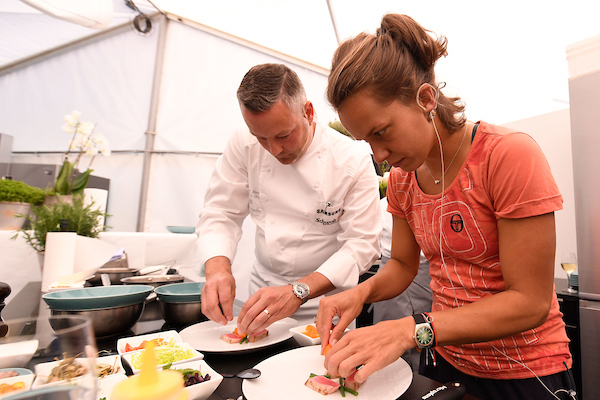
From getting cooking lessons from celebrity chefs to player interviews to going undercover, Sloane has been making the most of her stint as a reporter. Check out some of her most memorable moments from the Indian Wells fortnight!

Working undercover a BNP Paribas Open info desk attendant:

Interviewing American wildcard Kayla Day, who reached the third round at Indian Wells:

Mingling with famed chef and restaurateur Nobu Matsuhisa:

Interviewing Vasek Pospisil after he scored a victory over ATP World No.1 Andy Murray:

“Everyone’s been like, ‘oh we loved it!'” Sloane said of the feedback she’s been receiving. “And you know how certain fans love certain players? When I did that thing on Dustin Brown, everyone was like ‘oh my god I love him, I love his hair!’

“So I’ve gotten really good feedback. But it’s mostly my family that’s been telling me it’s so cool.”

Source link

News | WTA Tennis English

  • Posted: Jan 01, 1970

INDIAN WELLS, CA, USA – Venus Williams had to come back from a set down to oust Chinese qualifier Peng Shuai and make her way into the quarterfinals of the BNP Paribas Open.

After battling back from match point down earlier in the week against Jelena Jankovic, Venus was able to pull off another turnaround against Peng, advancing 3-6, 6-1, 6-3.

“There were some up-and-downs and errors. It was so frustrating,” Venus admitted in her post-match press conference. “But I feel like I got my focus more in that second set and towards the end of the third, because — I don’t know. I’m just a competitor.

“So if things get closer, then I think my better tennis is going to come. But obviously I don’t want things to get close. I want to try to run away with it.”

It was one-way traffic for the Chinese player in the opening set, though, as Venus found herself down an early break almost as soon as she took to the court. Peng bossed the rallies with her tricky two-handed groundstrokes off both wings, and she quickly took the opening set with another solid break.

But it was a completely different story as the seven-time Grand Slam champion roared to life in the second. Venus found her rhythm to break Peng four times – the Chinese player avoided a shutout by grabbing one of the breaks back, but couldn’t stem the tide as the former World No.1 sent the match to a decider.

With the momentum – and the vocal southern California crowd – firmly behind her, Venus powered through the final set. She traded breaks early on, but got her second opening when a Peng double fault gifted her the chance to serve out the match.

Venus took her spot in the final eight with ease, moving into the Indian Wells quarterfinals after just under two hours.

She’ll play the winner of No.2 seed Angelique Kerber and Elena Vesnina for a spot in the semifinals.

Source link