Indian Wells: Williams Interview
An interview with Serena Williams after her win in the second round of the BNP Paribas Open.


An interview with Serena Williams after her win in the second round of the BNP Paribas Open.
Camila Giorgi had Saturday’s shot of the day at the BNP Paribas Open.
INDIAN WELLS, CA, USA – The BNP Paribas Open draw has been shaved down to 16, and on a blockbuster Tuesday at the Indian Wells Tennis Garden, the quarterfinals will be set. Here’s a look at the match-ups.
Tuesday, Fourth Round
[1] Serena Williams (USA #1) vs. Kateryna Bondarenko (UKR #70)
Head-to-head: Williams leads 2-0
Key Stat: Williams’ last loss to a player outside the Top 50 was in 2014 (Charleston, Cepelova).
World No.1 Serena Wiliams showed signs of nerves and rust early in her third round match with Yulia Putintseva, but by the time it was over she looked like a player who was dead set on winning this title for the first time in 15 years. Still, Williams would like to rid herself of the slow starts that have created problems for her over the last few years. “I know last year I had a lot of slow starts, but I feel like I have done better this year,” Williams told the media on Sunday. “I had a slow start in this one, too, but it’s getting better. It just goes to show there is always something I can improve on. I’m always looking to improve on things.” On Tuesday she’ll look to improve her career record at Indian Wells to 21-1 when she meets qualifier Kateryna Bondarenko. The Ukranian reached the round of 16 for the first time at Indian Wells by surviving a third set tie-break with Lesia Tsurenko. Williams has won their two previous meetings, both in straight sets.
Pick: Williams in two
[3] Agnieszka Radwanska (POL #3) vs. [19] Jelena Jankovic (SRB #20)
Head-to-head: Radwanska leads, 6-3
Key Stat: Jankovic is bidding for her 50th Top 10 win today.
In a year that has been characterized by its unpredictability on the WTA Tour, Agnieszka Radwanska has been one of the steadier performers, making at least the semifinals in all three events she has played. Will she make it four in a row? Radwanska certainly owns the upper hand in her head-to-head with 2010 BNP Paribas Open champion Jelena Jankovic. The Serb took their first two meetings but since then Radwanska has won six of seven. The 2014 runner-up eased past Monica Niculescu in straight sets on Sunday and told reporters she’s yearning for the BNP Paribas Open title after the match. “Of course I was here in the final and really close to hold the trophy,” Radwanska said. “So this is another year to try. Obviously I am really trying every year to get the title. I really want to have that trophy at my home.” To reach the quarterfinals, Radwanska will have to maintain the hot hand against a hot opponent. San Diego resident and self-proclaimed California girl Jankovic comes in on a roll, having dropped just five games in her two rounds thus far.
Pick: Jankovic in three
[5] Simona Halep (ROU #5) vs. Barbora Strycova (CZE #37)
Head-to-head: Tied, 1-1 (Halep leads 1-0 at Tour-level)
Key Stat: Not since 1991 (Navratilova) has a WTA player successfully defended the Indian Wells title.
Though Serena Williams is the prohibitive favor in any WTA draw she enters, last year’s champion Simona Halep believes that the BNP Paribas Open is up for grabs. “I think the tournament is open and anyone can win it,” she told reporters at a media roundtable before the event started. “Many players are playing well now and young players are coming that are playing well.” The Romanian’s title defense has been going swimmingly thus far. After blitzing Vania King in her first match, she rolled past a world-class opponent in difficult conditions on Sunday night, braving the wind and the powerful game of Ekaterina Makarova to earn a straight-sets win. Halep’s opponent in the round of 16 has been playing good tennis herself. Barbora Strycova stunned Garbiñe Muguruza at the Australian Open to reach the second week, and last month she went all the way to the Dubai final before falling to Sara Errani. Is the 29-year-old Czech in good enough form to derail an in-form Halep? She certainly has the game, and the experience, to do it.
Pick: Halep in three
[8] Petra Kvitova (CZE #9) vs. [WC] Nicole Gibbs (USA #95)
Head-to-head: Kvitova leads 2-0
Key Stat: Gibbs has never won a set from a Top 10 player.
Petra Kvitova is still trying to find her form in the California desert. Meanwhile, a rising American qualifier is hitting her stride right before our eyes. Nicole Gibbs notched her career-best win against Madison Keys in the second round here, and will be looking to take down a bigger fish in two-time major champion Kvitova. But Gibbs knows she’s got her work cut out for her. “I have played her a couple times before also on some big stages: center court at New Haven and at US Open,” Gibbs told media after her straight-sets win over Yaroslava Shvedova on Sunday. “But I do feel like I’ve gotten to see what her level is like. Both matches have definitely been in her favor but competitive, so I’m just looking to hopefully get a bead on her serving early in the match.” Kvitova, who is hoping to match her career best result at Indian Wells, knows of the challenges that Gibbs can present. “I think she’s a very good mover,” Kvitova said. “She can catch a lot of balls and put back everything. I will have to be ready 100 percent, and really have to fight again.”
Pick: Gibbs in three
-Chris Oddo, wtatennis.com contributor
INDIAN WELLS, CA, USA – No.3 seed Agnieszka Radwanska’s BNP Paribas Open campaign gathered further momentum on Tuesday with a polished victory over former champion Jelena Jankovic.
Watch highlights, interviews and more video from Indian Wells right here on wtatennis.com!
A contest between two of the game’s sprightliest movers produced no shortage of entertaining exchanges, but more often than not it was Radwanska having the final say. After reeling off the final four games of the first set, she repeated the trick in the second to close out a 6-3, 6-3 victory.
The result means Radwanska has now won all six of her meetings with Jankovic on cement, the last two of which have come at the Indian Wells Tennis Garden. And while the statistic will have surprised few inside Stadium 1, the Pole was not among their number.
“Well, to be honest, I never knew that,” Radwanska said when the extent of her dominance was unveiled by on-court interviewer Andrew Krasny. “We’ve played so many good matches before, and I just remember that it’s a lot of running, a lot of rallies and I really prepared for that today. With the conditions it was important for me to win that match in two sets.”
For all Jankovic’s huff and puff, the outcome never looked in doubt. It is arguable whether there is anyone in the game at present quite so adept at turning defense to attack as Radwanska, who dipped into her box of tricks to delight the crowd and keep the Serb at arm’s length.
Adopting the role of aggressor, Jankovic started well enough, a smart backhand giving her a break of serve in the opening game. However, the frustration at having to constantly find lines to win points soon began to take its toll. In the eighth game, a couple of double faults handed Radwanska a break and ultimately the set.
A similar story unfolded in the second, Radwanska finding an answer for whatever question the 2010 champion posed. Jankovic battled away gamely until the bitter end, saving a handful of match points in the final game before sending a forehand long to finally succumb.
Petra Kvitova, who earlier on fought back to end qualifier Nicole Gibbs’ run, 4-6, 6-3, 6-4, will present an entirely different challenge in the quarterfinals. Radwanska has traditionally struggled with the Czech’s firepower, although did come out on top in their most recent match-up, at last year’s BNP Paribas WTA Finals Singapore presented by SC Global.
“I just remember it was very, very tough match. Long, tight, everything was tighter, every game, point by point,” Radwanska said asked about their Singapore encounter.
“[Here it’s] a little bit different surface, different conditions, definitely… But I think always against her you really have to play good tennis and be careful, particularly on her serve.”
Highlights from the fourth round action at the BNP Paribas Open.
Highlights from the quarterfinal action at the BNP Paribas Open.
Serena Williams takes on Agnieszka Radwanska in the semifinals of the BNP Paribas Open.
INDIAN WELLS, CA, USA – Victoria Azarenka continued her near-perfect start to 2016 by showing vintage form against an out of sorts World No.1 Serena Williams to win the BNP Paribas Open final, 6-4, 6-4, and return to the Top 10.
Watch highlights, interviews and more video from Indian Wells right here on wtatennis.com!
Playing in her first Indian Wells final since 2001, the top seed hadn’t dropped a set through her first five matches but struggled throughout the nearly 90-minute match, converting just one of 10 break point opportunities and striking 33 unforced errors.
Azarenka, by contrast, won 86% of her first serve points, and held off an impressive fightback from the 21-time Grand Slam champion – who won four games in a row with two chances to level the second set from 1-5 down – to win her second Indian Wells title, and first Premier Mandatory event since the 2012 China Open.
A gracious Serena fought back tears during her runner-up speech.
“It was really hard the last moment I had here wasn’t the greatest, so thank you so much,” she said, addressing the crowd.
“Thank you so much for the cheers; I can’t tell you how much it means to me. I can’t even begin to tell you!
“I’m just so happy to be able to stand here again.”
The Belarusian was equally effusive in her praise for Williams, against whom she has now won four of 21 total matches – becoming the only player to defeat the American in more than three championship matches.
“I wanted to first address a personal thank you to Serena. I know how emotional it was for you to be back here and you truly inspired so many people out there to see the type of committment you have to the game. It’s truly inspiring.
“Thank you for that from the bottom of my heart. You are an amazing competitor who changed the game.
“If it wasn’t for you and how hard you work and seeing you play so well, I wouldn’t be as motivated to come back and work so hard. Thank you on behalf of the sport.”
With Sunday’s win, Azarenka will return to the Top 10 for the first time since the summer of 2014, at No.8. Meanwhile, Serena remains atop the WTA rankings heading into the Miami Open, a tournament she has won eight times.
She does it! ?@Vika7 Azarenka captures @BNPParibasOpen crown & is heading back to the Top 10! #WTA https://t.co/bapdsRCuiu
— WTA (@WTA) March 20, 2016
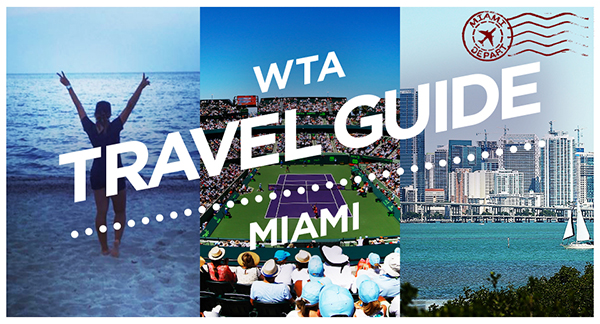

¡Bienvenido a Miami!
Known for the weather, Art Deco architecture, pristine beaches, all-night parties on South Beach and cigar shops on Calle Ocho, Miami is a leading destination for travelers from all over the world.
The stars of the WTA leave the desert and head towards the beach for the second Premier Mandatory of the year and to compete for the chance to be crowned champion of the 2016 Miami Open.
Miami-resident Monica Puig has joined in on the fun for this edition of the WTA Travel Guide: Miami and gives you her recommendations for must-sees and must-dos in the Magic City.
WATCH THE MATCHES
Within the bright lights and big city of Miami, nestled on the island town of Key Biscayne, the Miami Open offers the perfect combination of world-class tennis and a premier entertainment experience.
New to this year’s event is the Taste of the Miami Open, where fans can sample a variety of dishes from celebrity chefs and local restaurants. If you’re looking to hop aboard the food truck trend, check out one of the three food trucks on site providing a variety of culinary offerings. Click here for all of the delicious dining options for you to sample during your visit.
Qualifying runs March 21 – 22, with matches beginning at 10:00am. Main draw is March 22 – April 3, with day sessions beginning at 11:00am. Night sessions begin March 23 and start at 7:00pm. Looking for tickets? Click here.
WHERE TO STAY
One of the most visited cities in the world, there is no shortage of first-class hotel accommodations for you to choose from when visiting Miami.
For a true luxury beach escape with convenient access to the Miami Open, the Ritz Carlton Key Biscayne is the place to stay. With a 20,000 square-foot spa, four restaurants, access to water activities on Biscayne Bay and the largest tennis facility of any Ritz Carlton property in the Cliff Drysdale Tennis Center, there is no shortage of ways to entertain people of all ages.
If you’re looking to venture off Key Biscayne, the Four Seasons Miami offers 221 deco-inspired rooms in the heart of the sophisticated neighborhood of Brickell. With two pools, and free access to Equinox gym and more than 100 fitness classes offered each week, the Four Seasons can ensure you stay active after a day of watching the world’s best athletes.
The JW Marriott Marquis not only provides guests with the opportunity to eat at celebrity Chef Daniel Boulud’s restaurant db Bistro Moderne, but also a chance to explore two floors worth of entertainment including the indoor Mariano Bartolome Indoor Golf School with a simulator, a virtual bowling alley and a NBA-approved basketball court.
Included on Travel + Leisure’s “500 World’s Best Hotels 2015” the Epic Hotel, guests can enjoy boutique-style accommodations but with big-city luxury. Relax by the pool or enjoy Miami nightlife at Lit Lounge.
The Conrad Hotel offers beautiful minimalist designed rooms, with a bar on the 25th floor to give guests a panoramic view of the city. Rooftop tennis courts and a pool, as well as a 24-hour fitness center are all excellent options if you’re looking to be active during your stay.
WHERE TO EAT
Miami offers seemingly unending culinary options, but here are a few of our favorite for your dining pleasure.
For a true taste of Latin America, head to Coya Restaurant for traditional Peruvian food and bespoke pisco cocktails.
If you’re looking to experience the informal Japanese dining style called izakaya, visit Zuma Restaurant in the heart of downtown, for modern Japanese flavors.
In the beautiful neighborhood of Coconut Grove, Jaguar Ceviche Spoon Bar and Latam Grill is known for their fresh Ceviche Spoon Bar, as well as their take on modern Mexican food. They also offer a well curated selection of South American wines and a signature cocktail list.
Voted OpenTable’s Diners Choice Award for Most Vibrant Bar Scene in Miami, Bulla Gastrobar specializes in Spanish and Catalan dishes. The casual dining experience stays true to providing diners with the chance to sample the most popular tapas in Spain without leaving Coral Gables.
Named Ocean Magazine’s “Best Place to Brunch in Midtown,” Apeiro Kitchen & Bar features Mediterranean cuisine gives diners the opportunity to enjoy lunch, brunch, happy hour or dinner both in a rustic indoor and outdoor setting.
MONICA PUIG‘S FAVORITE SPOTS
Although she was born in Puerto Rico, Monica Puig calls Miami home and is one of the few players who has the opportunity to play an event in front of her hometown crowd. When she isn’t on court, here are a few of her favorite must-see spots in Miami:

The beach is my happy place. There are so many beautiful beaches in Miami. Click here for a great list of all sandy spots you can visit.
My favorite activity when I’m at home is to go out to eat with my family. For traditional Cuban food, I love Sergio’s for a healthy and fast breakfast. For a great meal in Coral Gables, my go-to spot is Hillstone. They have amazing spinach dip and ahi tuna tartare and then after dinner you can walk the famous Miracle Mile for more shopping and bars. If you’re craving an awesome steak dinner, I love Morton’s, located in the Financial District.


Miami has no shortage of amazing shopping. When I’m not at the beach or on court, I love going to the Miami Design District to check out the high-end stores. For great outlet shopping, Dolphin Mall is the place to go, with stores like Bloomingdales, Saks Fifth Avenue and Neiman Marcus all at discount prices.
And finally, don’t forget to come out and cheer me on during my matches at the Miami Open. See you there!
Eight-time champion Serena Williams will open accounts at the Miami Open on Thursday, as the seeds on the top half of the draw play their first matches of the week. Here’s a preview of what to watch.
Thursday, Second Round
[1] Serena Williams (USA #1) vs. Christina McHale (USA #56)
Head-to-head: First meeting
Key Stat: Williams owns a 64-5 record at Miami.
Though she’s been in dazzling form in 2016, Serena Williams has yet to hold a trophy aloft this season. After dropping finals at the Australian Open (Kerber) and Indian Wells (Azarenka) Williams has now lost back-to-back finals for the first time since 2004. Will a return to the scene of so many breathtaking triumphs provide Williams with the inspiration to claim her fourth consecutive title (ninth overall) at Crandon Park? Williams will open against compatriot and Fed Cup teammate Christina McHale in second-round action on Thursday. The 23-year-old New Jersey native knocked off Japan’s Misaki Doi in first-round action on Wednesday.
Pick: Williams in two
[3] Agnieszka Radwanska (POL #2) vs. Alizé Cornet (FRA #42)
Head-to-head: Radwanska leads, 6-1
Key Stat: Radwanska is one of five former champions in the Miami draw, along with Serena Williams, Victoria Azarenka, Venus Williams and Svetlana Kuznetsova.
Off the tour with a back injury for nearly two months, Alizé Cornet won her first tour-level match since the Australian Open on Wednesday when she defeated Galina Voskoboeva in straight sets. Before her injury, Cornet was making big strides against the WTA’s elite, and she’ll be tasked with picking up where she left off on Thursday. Though she enters Miami with a 9-38 lifetime record against the Top 10, Cornet has won seven of her last 13, and also owns four Top 2 victories. But the match-up could prove too difficult for the talented Frenchwoman on Thursday when she faces 2012 champion and current World No. 2 Agnieszka Radwanska. The Pole has been in scintillating form all season. She leads the WTA in wins with 17 and has reached at least the semifinal of all four events she has played in 2016.
Pick: Radwanska in two
[5] Simona Halep (ROU #5) vs. Daria Kasatkina (RUS #36)
Head-to-head: First meeting
Key Stat: Kasatkina is playing with a Top 40 ranking for the first time.
One of the more heavily anticipated match-ups of the second round pits fifth-seeded Simona Halep against rising Russian Daria Kasatkina. Both players are coming off quarterfinal appearances at Indian Wells, and though Halep will come in as the heavy favorite, all eyes will be on 18-year-old Kasatkina for two reasons: one, to see how the Russian will handle the challenge of backing up her breakout performance at Indian Wells, and two, to discover how Kasatkina matches up against one of the elite forces of the game in Halep. The Romanian was in good form at Indian Wells before falling to Serena Williams in the quarterfinals, and she has told reporters that she is feeling 100 percent healthy for the first time all season. Will her improving health mean another bump up in form for the Romanian?
Pick: Halep in two
[12] Elina Svitolina (UKR #16) vs. Zhang Shuai (CHN #68)
Head-to-head: First meeting
Key Stat: Zhang has already doubled her 2015 tour-level win total in 2016.
It’s been an incredible, emotional year for China’s Zhang Shuai, and the season isn’t even three months old. After qualifying for the Australian Open in January, Zhang went on a magical run to the quarterfinals, snapping her 0-for-14 streak at the majors by upsetting Halep in the first round. Zhang took a wild card into Indian Wells after winning a Challenger title in February and upset Caroline Wozniacki in the WTA’s longest match of the season (3:24) before falling to eventual champion Victoria Azarenka in the third round. China’s No.2 player will face a tough second-round test in No.12 seed Elina Svitolina on Thursday in Miami. The Ukrainian No.1, who recently hired seven-time major champion Justine Henin as a special consultant to her team, is seeking to reach the third round for the third consecutive year in Miami with a win.
Pick: Svitolina in three
[19] Timea Bacsinszky (SUI #20) vs. Margarita Gasparyan (RUS #41)
Head-to-head: First meeting
Key Stat: Gasparyan is making her main draw debut in Miami.
One of the bigger breakout performers of 2015 is in the process of rebuilding her game – and health – in 2016. Switzerland’s Timea Bacsinszky had to spend seven weeks without picking up a racquet this off-season after suffering a knee injury in her last event of the season in Luxembourg. Cheated out of a crucial training block during the winter, the 26-year-old has elected to build her fitness while playing events this season. The results have been mixed, but after a big win over Eugenie Bouchard last week at Indian Wells it appears that the Swiss is rounding into form. But she’ll be tested early in Miami when she faces Russia’s Margarita Gasparyan. The 21-year-old reached the second week at the Australian Open this winter, and has already notched eight wins on the season. She comes into Miami carrying a career-best ranking of No.41.
Pick: Bacsinszky in three
-Chris Oddo, wtatennis.com contributor