
Tennis News

From around the world

News | WTA Tennis English

  • Posted: Jan 01, 1970

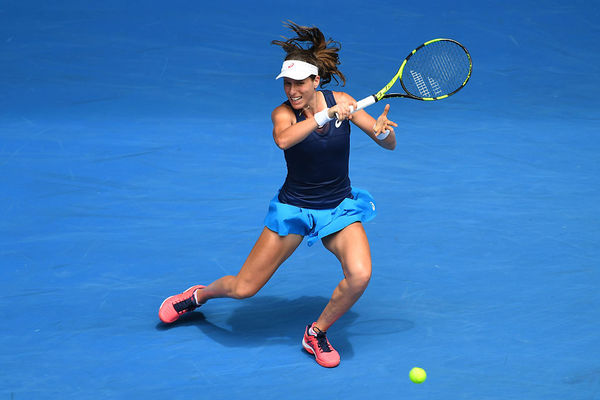
MELBOURNE, Australia – 2016 semifinalist Johanna Konta raced through a much-anticipated collision with former World No.1 Caroline Wozniacki, 6-3, 6-1, to return to the second week at the Australian Open.

“Against someone like Caroline, she’s not going to give it to you,” she said in her post-match press conference. “You really do have to earn it and win it till the very last point. I’m just very happy I was able to keep that pressure on.”

Konta rode a seven-match winning streak into the third round in Melbourne, having captured her second career WTA title at the Apia International Sydney last week.

“I think I had a longer streak a couple years ago. Still got awhile to go till then,” she said, referring to a 16 match winning streak she compiled in the summer of 2015 between the ITF and WTA circuits. “But I’m very pleased with how I’ve just been able to problem solve in the last matches that I’ve played, really play myself into matches where I felt I started slowly, and, like today, maintain the level.

“I’ve played against some very good players. To be able to come through that, I’m very pleased.”

Contrasted against the Brit’s meteoric rise was Wozniacki across the net; the Dane had been the model of consistency for much of the last decade before an injury-addled 2016 took her as low as No.74 in the WTA rankings.

A run to the US Open semifinal served as a springboard for the No.17 seed, who returned to the Top 20 by year’s end and was looking to interrupt Konta’s run with a big win to start the season.

The first six games were hotly contested, but each went with serve before the Brit broke through on her third break point of the opening set, winning eight straight games to take a set and 5-0 lead.

“I know this may sound like a broken record, but I do try very hard to always make sure I really take the good and the things I can improve on from every match that I play and reinvest it into the next match. Whenever a similar situation arises, I make sure that’s in my bank and I can use my experience from that.

“I think hopefully I’m getting a little wiser.”

Undaunted, Wozniacki got on the board and pushed Konta through a tense final game before the No.9 seed clinched victory in one hour and 17 minutes.

“She played really well. She served really well, returned deep. She was going for the lines. It was going in. You could see she had the confidence,” the Dane said after the match.

“I’m looking forward to the season. It’s a better start than last year. We just have to go from here, go back and grind and then come back and play again.

“There’s lots of tournaments ahead. That’s what I’m looking forward to.”

Up next for the top-ranked Brit is 2015 Australian Open semifinalist Ekaterina Makarova; the No.30 seed survived a titanic ecounter with reigning BNP Paribas WTA Finals Singapore presented by SC Global champion and No.6 seed Dominika Cibulkova, 6-2, 6-7(3), 6-3.

“Every time we play, we have a battle,” Konta said of her Russian rival. “I think last year was 8-6 in the third. I remember that was a high-level match from both of us. That was really a great match to be a part of.

“She had a great match against Dominika Cibulkova. Dominika is not an easy player to beat, and she was able to do that. She’s playing obviously great tennis.

“I think she really enjoys playing here. She always seems to do well on these courts. I’m looking forward to it. We’ll deal with whatever challenges come up the next day.”

Source link

Insider Notebook: Generation Next

Insider Notebook: Generation Next

  • Posted: Jan 01, 1970

MELBOURNE, Australia – On Day 3 at the Australian Open, a smattering of upsets was overshadowed by the youth movement through the draw. Will 2016 be the year the next generation makes an impact? They certainly think so.

– Serena, Sharapova, and Radwanska roll on: Serena Williams and Maria Sharapova each dropped just three games en route to easy wins, with Serena beating Hsieh Su-Wei 6-1, 6-2, and Sharapova beating Aliaksandra Sasnovich 6-2, 6-1. Agnieszka Radwanska played some of her best tennis of the year to hold off Eugenie Bouchard 6-4, 6-2.

– Kristyna Pliskova sets a record…only to lose: You have to feel for Kristyna Pliskova. She broke Sabine Lisicki’s record of 27 aces in a match, firing 31 aces against Monica Puig. Yet despite the cannonballs coming off her racket and holding five match points, Pliskova lost 4-6, 7-6(6), 9-7 in a heartbreaker.

Said a disappointed Pliskova: “I would rather hit 20 aces and win.”

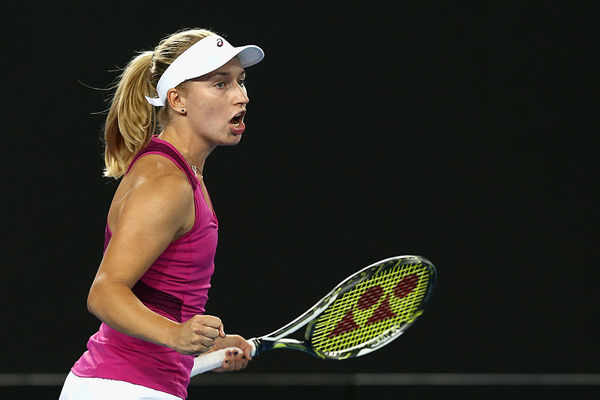
– Daria Gavrilova embraces her moment: Inspired by the crowd, the court, and a vulnerable opponent, Gavrilova knocked out No.6 seed Petra Kvitova 6-4, 6-4 in 90 minutes on Margaret Court Arena. It’s a disappointing trip down to Australia for Kvitova but Gavrilova was one of the most dangerous unseeded players in the draw. It was never going to be easy.

– Kataryna Bondarenko douses Svetlana Kuznetsova: Kuznetsova has been on fire over the last week, dating back to her title run at the Sydney International. But Bondarenko took it to her, firing 28 winners to 14 unforced errors to end the No.26 seed’s Australian Open and advance to her first third round at a major since 2011.

– Don’t look now: Belinda Bencic is cruising through the draw. She plays Bondarenko in the third round and could play Sharapova in the Round of 16.

– Spoilers back-up their upsets: It’s a common pattern. Pull off a big win and go out meekly in the next round. But that hasn’t been the case in this year’s Australian Open. Five of the seven players who knocked out seeds in the first round — Kasatkina (d. Schmiedlova), Margarita Gasparyan (d. Errani), Yulia Putintseva (d. Wozniacki), and Lauren Davis (d. Anastasia Pavlyuchenkova), and Elizaveta Kulichkova (d. Petkovic), won through today.

Daria Gavrilova

– Youth Brigade: 10 of the 16 players into the third round in the top half of the draw are aged 22 and under, with three of them being teenagers: Daria Kasatkina (18), Margarita Gasparyan (21), Yulia Putintseva (21), Belinda Bencic (18), Lauren Davis (22), Monica Puig (22), Anna Lena Friedsam (21), Elizaveta Kulichkova (19), Kristina Mladenovic (22), and Daria Gavrilova (21).

Of that group, six are into the third round of a major for the first time in their careers. Nice to see some fresh faces to start the season.

“It’s great,” Gavrilova said. “We’re all excited. We’re all pretty friendly. We hang out together. Yeah, like I said, we’re all supporting each other. I think it’s going to be awesome.”

– Bouchard bows out: Bouchard led 4-2 in the first before Radwanska reeled her back in for a 6-4, 6-2 win, but the Canadian once again showed flashes of her brilliant 2014 form. She just couldn’t sustain the level throughout the match. With the loss, Bouchard will drop out of the Top 50 for the first time since 2013.

“That was a great challenge for me to play somebody like Eugenie in the second round,” Radwanska said. “But I think I was doing everything right today. That’s why I win that match in two sets. Definitely not an easy draw.”

Notable: Radwanska is 14-0 in sets this year. She plays Puig next.

Monica Puig

– Puig’s change of perspective: Puig has had a strong start to 2016, making her first Premier final at the Sydney International and now into the third round at the Australian Open for the first time. It’s a strong rebound from a disappointing 2015 campaign and Puig says she’s playing better simply because she’s fallen back in love with the sport.

– Top half of the draw set: Here are Friday’s third round matches: Serena vs. Kasatkina, Gasparyan vs. Putintseva, Bencic vs. Bondarenko, Davis vs Sharapova, Radwanska vs. Puig, Friedsam vs. Vinci, Suarez Navarro vs. Kulichkova, Mladenovic vs. Gavrilova.

– The Origins of DropshotPova: Turns out Sharapova’s decision to add the dropshot to her arsenal was driven by pure competition.

“It’s something that I have added. It’s actually something that I had to add, because I was getting really frustrated losing to my hitting partner all the time. He just stood so far back behind the baseline I was like, just can’t handle him beating me so often. I have to just change things around. That’s kind of when I started getting into that a little bit.

He was a little surprised (laughter). But it started working, so that was good.

– Serena’s sarcasm: I think it’s safe to say Serena probably isn’t too excited to hear Roberta Vinci’s name anymore. When a journalist asked Serena whether she’s watched her US Open loss to Vinci — this was the third question about Vinci in the press conference — Serena quipped: “Yeah, I watch it every day. Every night to get ready.”

Li Na

– Catching up with Li Na: The 2013 Australian Open champion was downright chatty on a wet Wednesday morning as she met with reporters. The main conversation point surrounded the four Chinese women — Wang Qiang, Han Xinyun, Zhang Shuai, and Zheng Saisai — who progressed to the second round. It’s the first time four Chinese women have made the second round at a Slam since 2006.

“I remember last year in Wuhan, one reporter asked me what do you think about the Chinese players, they always lose in the first round,” she said. “I got a little bit angry. They need more space. They need more time.” She was right.

– Simona Halep’s off-season problems: After her first round loss on Tuesday, Halep revealed to the Romanian press that she fell ill during her off-season training block and had to be hospitalized and put on antibiotics.

– Hate the player, not the game: Liked this from Radwanska, who went out of her way to point out that the increased depth on tour means every player is dangerous: “As we see now the ranking, it sometimes didn’t really showing the game, what the player actually showing. You play against the player, not the ranking.”

– Best Friends Forever: Kasatkina and Kulichkova are best friends with very different personalities and interests. One example: Kasatkina worships at the throne of Rafael Nadal. Kulichkova is a Federer fan. Somehow their friendship survives.

All photos courtesy of Getty Images.

Source link

News | WTA Tennis English

  • Posted: Jan 01, 1970

MELBOURNE, Australia – CoCo Vandeweghe ended No.1 Angelique Kerber’s title defense at the Australian Open on Sunday, defeating the German 6-2, 6-3 in the Round of 16 to make her first quarterfinal in Melbourne. Ranked No.35 and set to rise to a career-high ranking after the tournament, the big-hitting American bullied Kerber off the court with her power, firing 30 winners to 20 unforced errors in just 68 minutes.

1. This result was in the cards.

On paper, this was a significant upset. In actuality, you could see it coming from a mile away.

There’s no way around it: Kerber was still trying to find her form in Melbourne. She came into the tournament with just three matches under her belt – two of them losses – and though she successfully navigated the first week of play, she was never convincing.

The defending champion needed three sets to get past Lesia Tsurenko in the first round and Carina Witthoeft in the second round, relying on her physical defense to grind out matches against players who tried to hit her off the court.

That defense finally found its match against the ballistic ball-striking from Vandeweghe. The American is into her second Slam quarterfinal after scoring strong wins over Roberta Vinci, Pauline Parmentier, Eugenie Bouchard, and now Kerber. Her serve has been cranking and her backhand in particular has dominated her matches. Kerber’s defense alone would not be enough to unwind Vandeweghe on her day.

The German needed her serve — which has not been at the level it was last year — as well as good depth and width on her groundstrokes. Instead, she sent back a buffet of short balls in the middle of the court, which were automatic for Vandeweghe.

2. CoCo’s confidence carries her through.

The American insists that sometimes she “fakes it until she makes it”, an allusion to the idea that she’s not always as confident as she may seem on court. But there’s no denying that Vandeweghe talks as big of a game as she plays and that swagger seems to translate into tremendous clarity on court. Since the start of 2016, Vandeweghe has won 5 of her 6 meetings against Top 10 players.

Next, she gets a shot to avenge that one loss to Muguruza in Cincinnati last summer.

After coming back from a break down in the third set to beat Bouchard in the third round, Vandeweghe shrugged off any implication that the win was a particularly significant one. After converting match point against the World No.1 and defending champion, she calmly looked to her box and nonchalantly shrugged.

The message is clear from the 25-year-old Californian: this is what she expects of herself and this is what she knows she can do.

3. The No.1 scenario is simple.

Serena Williams can retake the No.1 ranking if she wins the Australian Open title. She plays her Round of 16 against Barbora Strycova on Monday.

Source link

Around The Grounds At The Australian Open

  • Posted: Jan 01, 1970
Caroline Wozniacki and Victoria Azarenka were joined by four colorful characters at the Australian Open Kids Tennis Day – as well as the Teenage Mutant Ninja Turtles.

Caroline Wozniacki and Victoria Azarenka were joined by four colorful characters at the Australian Open Kids Tennis Day – as well as the Teenage Mutant Ninja Turtles.

Eugenie Bouchard’s loyal fans, the “Genie Army,” were out in full force in sunny Melbourne.

Eugenie Bouchard’s loyal fans, the “Genie Army,” were out in full force in sunny Melbourne.

Australian player Daria Gavrilova thrilled Aussie fans with her spirited performance at her home slam. The 21-year-old made the Round of 16, her best result ever at a slam.

Australian player Daria Gavrilova thrilled Aussie fans with her spirited performance at her home slam. The 21-year-old made the Round of 16, her best result ever at a slam.

Down the road from Melbourne Park, Johanna Konta stands under the distinctive clocks of Flinders Street Station. Konta made British tennis history by becoming the first woman in 33 years to reach the quarterfinals of the Australian Open.

Down the road from Melbourne Park, Johanna Konta stands under the distinctive clocks of Flinders Street Station. Konta made British tennis history by becoming the first woman in 33 years to reach the quarterfinals of the Australian Open.

Australian Open tournament director Craig Tiley presents Maria Sharapova with a cake commemorating a major milestone: she reached 600 career singles wins after her victory in the third round.

Australian Open tournament director Craig Tiley presents Maria Sharapova with a cake commemorating a major milestone: she reached 600 career singles wins after her victory in the third round.

Australian Open quarterfinalist Angelique Kerber makes a young fan happy at Autograph Island.

Australian Open quarterfinalist Angelique Kerber makes a young fan happy at Autograph Island.

Naomi Osaka wants to be the very best, like no one ever was. The 18-year-old Japanese – pictured here meeting the penguins at Melbourne Aquarium – made the third round at the Australian Open.

Naomi Osaka wants to be the very best, like no one ever was. The 18-year-old Japanese – pictured here meeting the penguins at Melbourne Aquarium – made the third round at the Australian Open.

Serena Williams signs autographs after her Round of 16 win. The World No.1 has yet to drop a set in her Australian Open title defense.

Serena Williams signs autographs after her Round of 16 win. The World No.1 has yet to drop a set in her Australian Open title defense.

Annika Beck dealt the No.11 seed Timea Bacsinszky a second-round upset, and doled out many autographs at the Australian Open Autograph Island.

Annika Beck dealt the No.11 seed Timea Bacsinszky a second-round upset, and doled out many autographs at the Australian Open Autograph Island.

World No.113 Zheng Shuai was contemplating retiring after the Australian Open – until she upset the No.2 seed Simona Halep in the first round. Zheng – pictured here with coach Liu Shuo at the Chinese Museum – is now in her first ever Grand Slam quarterfinal.

World No.113 Zheng Shuai was contemplating retiring after the Australian Open – until she upset the No.2 seed Simona Halep in the first round. Zheng – pictured here with coach Liu Shuo at the Chinese Museum – is now in her first ever Grand Slam quarterfinal.

Two-time champion Victoria Azarenka signs a camera lens after her victory – can the undefeated No.14 seed make it three Grand Slams in Melbourne?

Two-time champion Victoria Azarenka signs a camera lens after her victory – can the undefeated No.14 seed make it three Grand Slams in Melbourne?

Daria Kasatkina, who made the third round in Melbourne, tries on a bit of Aussie spirit – and a cork hat – at the Australia Pop Up Shop.

Daria Kasatkina, who made the third round in Melbourne, tries on a bit of Aussie spirit – and a cork hat – at the Australia Pop Up Shop.

Carla Suárez Navarro is always calm – whether she’s on court or holding a freshwater crocodile. A quarterfinalist here in Melbourne, she’s looking to move into the final four for the first time in her career.

Carla Suárez Navarro is always calm – whether she’s on court or holding a freshwater crocodile. A quarterfinalist here in Melbourne, she’s looking to move into the final four for the first time in her career.

Garbiñe Muguruza during her post-match interview. The World No.3 made the third round of the Australian Open.

Garbiñe Muguruza during her post-match interview. The World No.3 made the third round of the Australian Open.

The spotlight is on World No.4 Agnieszka Radwanska, behind the scenes at her ESPN Player Montage. The reigning WTA Finals champion is seeking to make the Australian Open her first Grand Slam title.

The spotlight is on World No.4 Agnieszka Radwanska, behind the scenes at her ESPN Player Montage. The reigning WTA Finals champion is seeking to make the Australian Open her first Grand Slam title.

Source link

Serena Celebrates Instagram Milestone

  • Posted: Jan 01, 1970

Serena Williams never misses a chances to show off her dance moves, and a major social media milestone is no exception. The World No.1 just crossed the four million followers mark on Instagram, and she debuted a move that she dubbed the “4 million follower dance.”

So how exactly does one react when reaching that many million followers?

Click right here to find out!

Source link

News | WTA Tennis English

News | WTA Tennis English

  • Posted: Jan 01, 1970

MELBOURNE, Australia – Johanna Konta will play the biggest match of her career on Wednesday when she faces six-time champion Serena Williams in the quarterfinals of the Australian Open. By all accounts, the 25-year-old doesn’t even see it that way.

Konta, who is riding an eight-match winning streak after taking the Apia International Sydney title, has won her last 18 sets of tennis. Her serve, a weapon that has emerged as the cornerstone of her game, has been broken just twice in Melbourne. There’s no reason for Konta to be short of confidence going into her first career meeting against Serena, but the humble Brit’s approach to her tennis these days is what sets her apart from the pack.

Look no further than the final game she played to beat Ekaterina Makarova, 6-1, 6-4 in the Round of 16 on Monday. Serving to close out the match, Konta found herself down 0-40, a point away from finding herself back on serve against the talented Russian. She saved the first break point with an unreturnable first serve, the second with a forehand winner, and the third with an ace, cool as you like. Four points later, the match was over.

Closing out matches, handling one’s nerves with so much on the line, these are the marks of a resilient competitor. Just 48 hours earlier, 19-year-old Jelena Ostapenko had No.5 seed Karolina Pliskova on the ropes and twice failed to serve out the match, blowing a 5-2 lead and losing. The young Latvian immediately copped to her nerves, saying she was impossibly tight as she stared down the biggest win of her career. Konta, serving for a spot in her second career quarterfinal, didn’t even flinch.

Johanna Konta

So how did Konta do it? Here’s her eloquent response from the interview room after the match:

Q. You said the other day that you were surprised how you close out sets and matches as if it was any routine service game. Where do you draw that confidence in those big moments?
JOHANNA KONTA: I think more than anything it’s more trying to disassociate myself from the importance of the moment. I think it’s more keeping things in perspective and not panicking if I were to lose that service game or that point.

I think just keeping things in good perspective and just having trust in myself that however the match will swing, I will always be there to give my best and to always try to leave it all out on court and fight till the very end.

Q. When you talk about disassociating yourself from the big moments, obviously a lot of players struggle to do it, and I’m sure you struggled to do it five years ago. Why is that so difficult for most players? Why was it difficult early on to kind of be able to not be overwhelmed by the importance of moments in a match?
JOHANNA KONTA: I think it’s difficult, because you have also got to put things in perspective. Everyone you see playing has been playing since they were a little girl. And it’s no secret that to get to whatever sport or even whatever area of life, if you want to be part of the elite and if you want to get to the top of your field, there will be numerous sacrifices you’ll need to make.

And I think when you get to a position where you might see a glimmer of what you have dreamed of as a little girl or what you hoped for, what you’ve worked so hard for, it can feel kind of an all-or-nothing moment or what if I never get this chance again?

I think it’s more a bit of possibly fear of being able to replicate the position you’re in more than anything, but then I think that’s where you have also got to have a good perspective on things, and you’ve got to keep, I guess, the simple things in mind of what’s important to you.

Are you healthy? Is your family healthy? Do you have people around you that you love? Do you have people around you that love you?

I know it might sound really mundane and simple, but I guess you’ve got to go back to things that have got substance, and then in the end just trust in the work that you do, if it’s in the cards for you that you will get another opportunity or you won’t. I think [you have to] really love the sport for what it is and be grateful for the opportunities that it brings you, not necessarily what you wish it would.

Q. Going back to the separating yourself from the importance of the moment, in that nanosecond where the little voice in your ear goes, Psst, it’s match point, what is the trigger that you can shut that voice out, and how long does that take for it to become automatic?
JOHANNA KONTA: I don’t think it’s about necessarily, for me personally, anyway, about shutting it out. It’s more accepting that, Oh, I have got a little bit of tension. Or accepting that my mind might be yapping away, not necessarily fighting against it, but relaxing into it and saying, It’s absolutely normal to think like this.

I think it’s then easier for your motions to take over more than anything because you’ve got to trust the tennis in you, the motions in you, years and years of playing that I’m all of a sudden not going to forget how to serve. I have been doing it, I don’t even know how long, so I think it’s more just having that trust in the repetitions that you’ve had over the years.

Johanna Konta

Konta’s transformation over the last 18 months has been one of the most confounding stories in the women’s game. How does a player, one who was once a terrible closer who would let her emotions impede her game, suddenly learn to set it all aside and trust the tennis within her? Experience and maturity certainly play a role, as does Konta’s work with a sports psychologist.

But the rapidity of the change and her unwavering commitment and belief in herself is remarkable and a fantastic example to players up and down the rankings. Asked whether she believed she could beat Serena, Konta dismissed the premise of the question.

“I believe in my own ability,” she said. “I believe in the good things that I bring to the court, and I believe in my ability to fight till the very end.

“Now, there’s that and then there’s also an opponent out there, and this one’s going to be Serena Williams. I think it’s about playing, me going out there and doing what I want to do against her, and it will be about just staying focused on that. And if that brings me good things on that day, and if that puts me in a position to come through, then that’s great.

“But I’ve got to focus on the work and not think of whether I can or cannot beat her. I just need to stay on the work.”

All photos courtesy of Getty Images.

Source link

WTA Stars Celebrate NGWS Day

  • Posted: Jan 01, 1970

February 3rd marks the 30th annual National Girls and Women in Sports Day. NGWSD is a celebration created by the Women’s Sports Foundation, an organization founded by none other than WTA Founder Billie Jean King.

The theme for the 2016 NGWSD is entitled Leading the Way, and “is a nod to all those individuals and organizations who are on the front line for girls and women in sports: the organizations committed to advancing women’s issues, athletes who have overcome barriers, coaches who challenge their teams to succeed, girls who have faith in their own potential, and all those who continue to use the power of example to inspire greatness.”

Click here to learn more about NGWSD, and check out King’s tweet celebrating the day’s 30-year milestone:

Source link