Zhuhai: Garcia vs Stosur
Carolina Garcia takes on Samantha Stosur in the group stage of the Huajin Securities WTA Elite Trophy


Carolina Garcia takes on Samantha Stosur in the group stage of the Huajin Securities WTA Elite Trophy
ZHUHAI, China – Top seed Johanna Konta made a confident start to the Huajin Securities WTA Elite Trophy Zhuhai by brushing aside Samantha Stosur in straight sets on Wednesday.
Watch live action from Zhuhai this week at WTA Live Powered By TennisTV!
Flying starts to both sets laid the foundations for an impressive 6-4, 6-2 victory over former US Open champion Stosur.
“Against a player like Sam, who plays such a big ball and has such a big game, I really had to do my best to stay there for every single point and take my chances whenever they came,” Konta said in her on-court interview.
Konta had not played since withdrawing from the Prudential Hong Kong Tennis Open with an abdominal strain, but she showed no sign of rustiness early on, darting across the net to break serve in the opening game.
.@JoKonta91 smiles at being called one of the hardest working women in tennis @WTAEliteTrophy pic.twitter.com/AykRpXngRF
— WTA Insider (@WTA_insider) November 2, 2016
At a time of year when the bodies and minds of many players are hankering for a holiday, the Briton looked sharp, maneuvering Stosur around the court with ease to stretch this lead to 4-0. And while the Australian eventually found some success, reducing her arrears to 4-3, Konta steadied the ship, firing down a couple of aces to calmly close out the set.
The second set was even more emphatic, the World No.10 taking the first four games once again as she hurtled towards the finishing line and top spot in the Azalea Group.
Konta, the WTA’s Most Improved Player of the year, narrowly missed out on qualifying for the BNP Paribas WTA Finals Singapore presented by SC Global, but still has plenty to play for on her Zhuhai debut; victory over Stosur confirmed Konta will become the first Briton since Jo Durie in 1983 to finish the year inside the Top 10.
“It doesn’t matter what group you’re in here, every single player is so tough – the elite! – so that I know going into every single match that I get to play this week I have to be 100%.”
Earlier on in Camellia Group, Timea Bacsinszky saw off Timea Babos, 6-4, 6-2.
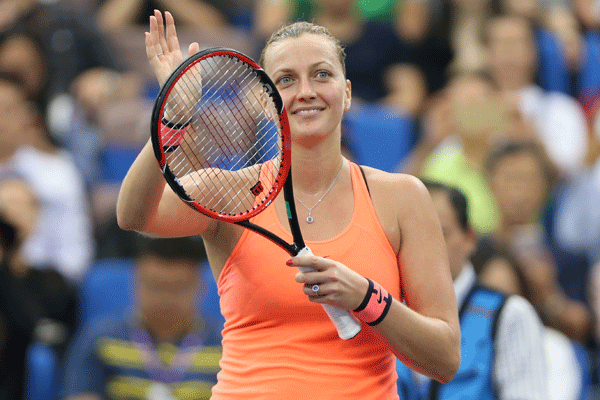
ZHUHAI, China – Top seed Johanna Konta produced a clinical display to brush aside Caroline Garcia and take her place in the knockout stage of the Huajin Securities WTA Elite Trophy Zhuhai.
Watch live action from Zhuhai this week at WTA Live Powered By TennisTV!
One hour was all it took for Konta to wrap up a 6-2, 6-2 victory and set up a semifinal against Elina Svitolina. Earlier in the day, No.2 seed Petra Kvitova also advanced, topping her round-robin group after a 6-1, 6-4 win over Barbora Strycova.
Konta confirmed she would finish the year ranked inside the Top 10 following an impressive win against Samantha Stosur in her opening match, and she underlined her status with an even more dominant display second time out.
It did not take long for the Briton to get her nose in front, hooking a passing shot beyond Garcia’s reach to break in the third game. A few games later it was the backhand doing the damage, the World No.10 finding the line to stretch her lead further, before wrapping up the set soon after.
Konta handily won the pair’s previous meeting, at this summer’s Rio Olympics and a run of five straight games in the second set sent her hurtling past the finishing post.
“I really felt I played a very consistent match. I didn’t give he many windows [of opportunity] and I’m very happy I managed to do that today,” Konta said during her on-court interview. ” She has such a big game so I really needed to apply myself on every point.”
“Right now, it’s just one more match tomorrow. I’m not looking any further than that. I’m going to have a very tough one and looking to compete as best I can.”

While Konta takes on Svitolina, in the other semifinal Kvitova meets Chinese No.1 Zhang Shuai.
Kvitova made a flying start against fellow Czech Strycova before encountering some late resistance. However, just as she has so often in her recent resurgence, she found her best tennis when it mattered most, withstanding some late service jitters – and a couple of break points – to take the final three games of the match.
“The second set was a little bit tight. It was really important to serve well in that game, 4-3. I was facing two break points and it was really the key point,” Kvitova said in her press conference.
“And I think that from the time that I started to play more aggressive than I did before, the beginning of the second set, so it helped me actually, to face the two break points to get back on the track and play little bit better and to return better as well. But, I mean, overall it was a good match. I think it was – the serve was really good today; helped me a lot as well. I’m happy that I’m in the semifinal for sure.”
It’s time for another WTA Frame Challenge – this time it’s Timea Babos who’s up for the test! See how she did right here!
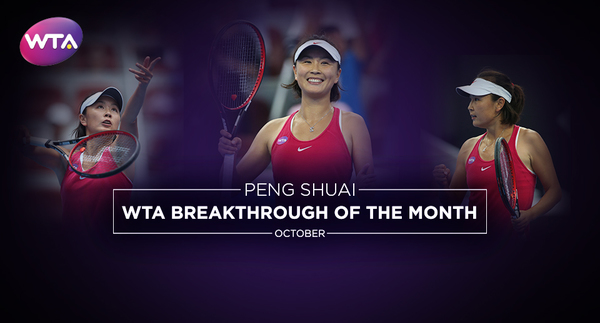

Peng Shuai was a few months removed from a US Open semifinal appearance when a back injury took her out of the game for almost a year.
“For me, two years ago, I was at a peak level,” Peng said at the China Open. “I could choose whether I would like to play or not. Actually, my friends and family did not agree with my surgery, because it’s too risky. Now I’m near 30 years old.”
The former Chinese No.1 agreed to have surgery, and was determined to get back to playing her best tennis.
“After the surgery, no one could guarantee I could come back to the court. What if I have more injuries if I come back to the court? I’d like to thank them for their support and care. I was a little bit stubborn to have the surgery. My friends and family supported me to undergo this surgery. It was quite a challenge for me.”
Peng began showing flashes of brilliance at home, upsetting former World No.1 Venus Williams in Beijing before finally adding a WTA title to her illustrious resume, winning the Tianjin Open.
Just shy of the Top 100 heading into 2017 (from a low of No.768), Peng is your Breakthrough Player of the Month!
Final Results for October’s WTA Breakthrough Performance Of The Month
1. Peng Shuai (70%)
2. Johanna Konta (23%)
3. Daria Gavrilova (8%)
2016 Breakthrough Performance Of The Month Winners
January: Zhang Shuai
February: Jelena Ostapenko
March: Nicole Gibbs
April: Cagla Buyukakcay
May: Kiki Bertens
June: Elena Vesnina
July: Kristina Kucova
August: Karolina Pliskova
September: Naomi Osaka
How it works:
Finalists are selected by wtatennis.com
Winner is then determined by a fan vote on wtatennis.com
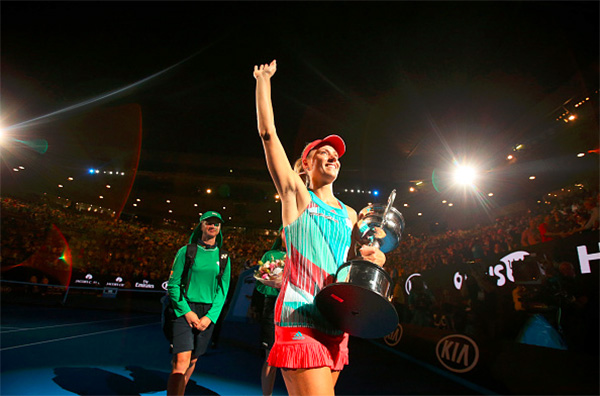
Angelique Kerber’s stunning maiden Grand Slam victory in Melbourne set the tone for a rollercoaster 2016 WTA season, but she wasn’t the only name to make her mark Down Under as Victoria Azarenka, Monica Puig and Svetlana Kuznetsova highlighted the first few weeks of WTA action during the Australian Swing.

The Rise of Angelique Kerber
Following a career-best season in 2015 – where she picked up four titles and finished the year at No.10 – Angelique Kerber stayed on course in Australia, but even she had no idea what was to come.
After being blown off the court by an inspired Victoria Azarenka in the final of the Brisbane International and being forced to withdraw from the Apia International Sydney in the second round due to a gastrointestinal illness, the German went straight to Melbourne for the first Grand Slam of the year.
Kerber, who’d she’d previously never advanced past the fourth round of the Australian Open – saved match point in her first match against Misaki Doi and went on to put together a clinical run to the final, where she locked horns with Serena Williams.
She stunned the tennis world by defeating the then-World No.1 in a thrilling three sets and lifting her maiden Grand Slam title, ending a 17-year major title drought for German tennis and cementing her place at the top.

Vika’s Red-Hot Australian Summer
Australia has been Victoria Azarenka’s home away from home for several years, but this time it was in Brisbane, not Melbourne, where the two-time Australian Open champion made her mark.
Starting the year ranked No.22, Azarenka tore through the draw at the Brisbane International without dropping a set. In fact, the Belarusian lost just 17 games en route to the first title of the year, a feat which still stands as the fewest games lost in winning a WTA title in 2016.
She went on to reach the quarterfinals at the Australian Open, her best result there since 2014, and picked up another two titles before succumbing to injuries – a back injury in Madrid, a right knee injury during the French Open – and finally putting an end to her season following the announcement of her pregnancy.

Puig and Kuznetsova Foreshadow 2016 Brilliance
In Sydney, a pair of surprising names who reached the final at the second Premier-level event of the year.
Puerto Rican qualifier Monica Puig, then ranked No.94, reached the second WTA final of her career after posting wins over a trio of Top 30 players, Anna Karolina Schmiedlova, Samantha Stosur and Belinda Bencic (via retirement). She faced Svetlana Kuznetsova, who’d just pulled off her biggest win since 2009 over No.2-ranked Simona Halep in the semifinals.
Even though Kuznetsova went on to drop just two games in her dominant victory over Puig, the pair’s surprise run to the Sydney final served as a preview for what was in store for Puig and Kuznetsova later in the season.
Elsewhere, Agnieszka Radwanska continued where she left off at the 2015 WTA Finals, returning to the home of her best tennis in Asia and picking up a title at the International-level Shenzhen Open. Sloane Stephens also took home the ASB Classic in Auckland and Alizé Cornet won in the Hobart International.
– Photos courtesy of Getty Images
Which was your favorite of Simona Halep’s hot shots from 2016? Watch all her best shots of the year right here!
At the final Premier Mandatory event of the campaign, the China Open, Agnieszka Radwanska reclaimed the trophy she won five years earlier, while over in indoor halls of Europe, Dominika Cibulkova and Svetlana Kuznetsova sealed their spots at the WTA Finals.
No.4 seed Catherine Bellis made a confident start to the Hawaii Open with a straight-set victory over Zhang Nan-Nan.
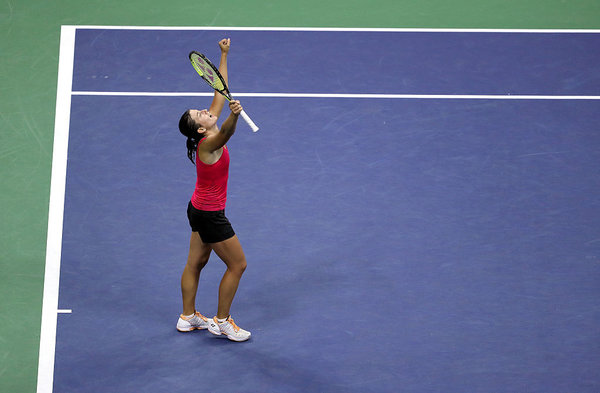
In 2015, Anastasija Sevastova came out of retirement. A year later, she scored the biggest win of her career – and one of the biggest upsets of 2016 – over No.3 seed Garbiñe Muguruza at the US Open.
Sevastova was a rising star back in 2011, reaching a career-high ranking of No.36 at 20 years old. But injuries soon sapped the desire away from the young Latvian, who hung up her racquets two years later, and was off the tour for two years more. After a few stints in coaching and studying, she decided to give tennis another go.
What brought her back to the sport?

“This one, this stage,” she said, gesturing to the enormous Arthur Ashe Stadium after her second round stunner. “I mean, look at that. It cannot get bigger.”
It doesn’t get much bigger than Arthur Ashe, and they don’t get much bigger than French Open champion Muguruza.
Sevastova, who started out the year ranked No.110, played well above her ranking and took a tight opening set at 7-5 before racing out to a 5-1 lead in the second.
With the finish line in sight, she faced a bit of a mental wobble as Muguruza clawed her way back up to 5-4 with the Spaniard serving to even the score.
In 2015, she came out of retirement. Tonight, she beats a GS champ. #Sevastova d. #Muguruza 7-5, 6-4. @MBUSA #usopen https://t.co/a5xfmjm8XC
— US Open Tennis (@usopen) September 1, 2016
“I stopped thinking. I was thinking too much at 5-2, 5-3. Then I said, ‘Okay, I have one more chance at 5-4. She’s serving. I broke her before enough times, so I will try this one more time,'” Sevastova explained.
“And still, even then it’s only 5-5. It’s still an open match like the first set.”
That positivity took the Latvian over the finish line, breaking serve to love to clinch the biggest upset of the US Open thus far – and the biggest win of her career – winning 7-5, 6-4.

But after the match, Sevastova was the first to keep her feet firmly on the ground.
“It still hasn’t settled in,” she said in her post-match press conference. “I mean, I’m tired mentally and it’s late. Normally I go to sleep at this time.
“It feels great, but it’s still not like I won the tournament. It’s only second round.”
Sevastova would go on to reach her first Grand Slam quarterfinal – knocking out No.14 Johanna Konta along the way – but her colossal second round victory over the reigning Roland Garros champion clocks in as the No.5 biggest upset of 2016.
All photos courtesy of Getty Images.